
Memorial Day Musings

Memorial Day Musings

Despite the fact we have had some decidedly “unsummer like weather” in the Northeast, Memorial Day is the unofficial start of the summer.   It is also the start of the real negotiations on the tax bill currently  moving through Congress.  Speaker Mike Johnson has said he would like to get the bill to the Senate for a vote before Memorial Day.   The bill will change as it moves through the Senate and back to conference,  but let’s take a look at how the current provisions in the bill  might impact the not-for-profit  (NFP) world.

Congress appears to be ready to increase the allowable deduction for state and local taxes (SALT) on an individual’s federal income tax return.  This may have a positive impact on NFP organizations. The hike from the current $10,000 cap on SALT deductions  for married couples to $40,000 is substantial.  There is a phase-out for those making more. At the same time, the bill proposes a hike in the standard deduction to $32,000 for a married couple.  On the face of it, these changes could make it more likely individuals can  itemize deductions on their federal income tax returns. This means it will be easier to deduct charitable contributions again.  Previously, the low cap on SALT deductions precluded people from itemizing since the standard deduction is so high. If you live in a “Blue” State, you pay a pretty hefty state income tax and property tax, most of which is not deducible.  Increased charitable contribution deductions may mean more donations to qualified NFPs.  Onc can only hope at this point. 

There have been two other developments in the NFP space worth mentioning.  As I write this, the U.S. Supreme Court has deadlocked on the legality and constitutionality of state  funding of  charter schools. The whole issue of charter schools is a contentious one, with public school unions opposing any funding for them at all, let alone those schools chartered by religious groups. There was no opinion issued by any of the Justices, so it is difficult to determine exactly what their thinking was on the matter. The tie vote was possible because Justice Barrett, a practicing Catholic, recused herself from the case.  The Court affirmed the decision of the Oklahoma Supreme Court that state funding of a religiously affiliated charter school was unconstitutional. In recent years the Court has been very accommodating to  religious groups.  Perhaps there was something about this case that Chief Justice Roberts, the presumed swing vote, did not like. Only time will tell if this ruling will stand. For now, the ban on state funding of religiously backed charter schools  applies only in Oklahoma and not nation-wide. 

The second development is the cost-cutting activities of the Trump Administration.  Many have been blocked by  federal district court judges. The issue of the “universal injunction”  will also be decided by the Supreme  Court in the near future.  I believe some of the cuts will in fact be enacted. Which will survive and which will be blocked is still up in the air, as well as any impact on NFP organizations. 

In closing, I want to wish all of you a wonderful Memorial Day.  And remember to contribute to your favorite charity.  It is the American thing to do.  Even if you don’t get a tax deduction. 
Hello Again Everyone!

It has been a while since I have been here. However, that does not mean that I have not been active. Here are some of the things that have been going on:

–The Moravian University School of Business and Economics is proud to announce it ‘s business programs have once again achieved accreditation from the Accreditation Council For American Business Schools and Programs (ACBSP). for the next ten year cycle. This is a mark of distinction for our School, its programs, faculty, students and our alum. Please join me in congratulating Dean Sonia Aziz and other members of the faculty for this accomplishment! I was the coordinator of this project, and it was truly a ton of work.

–With Dr. Heather Kuhns, I have been co-authoring a blog for the Pennsylvania Institute of Certified Public Accountants. We have published a number of these blogs already. Their focus is the management of a CPA firm rather than the technical accounting. You can find them in other locations in this website. I have to add that Dr. Kuhns also was an instrumental part of the SOBE accreditation process, including the update of the SOBE website and writing about our compliance for ACBSP Standard 7.

–I am finishing up my course work for my D.Min. degree. On the the major project (akin to a dissertation.).

–I am also active in my church as an ordained deacon, and serve on the Bishop’s task force for licensing and programming for its seminary.

In short, a lot has been going on. I will be back to the Not For Profit blogging very soon!

Lessons From a Cornhole Tournament

My university runs an annual cornhole tournament at the end of the Fall semester.  A colleague from the School of Business and Economics and I entered the tournament for the first time. We didn’t make it past the first round.  We were  annihilated by a team from the Admissions Office.  Our defeat was quick and decisive.  In truth, I was a piano on the back of my colleague.  I was nowhere near the target with my errant throws, sometimes missing the entire board.   As I thought about  my poor performance, I realized there were several lessons any manager can take away from the entire event in general and my poor performance in particular. What can you learn from a poor showing at a cornhole tournament?  Well, maybe a few things… 

Teamwork and morale building exercises are great tools and contribute to  successful organizations.   The tournament was a celebration at the end of the semester.  All staff and faculty across the entire university were invited.  Over thirty teams showed up to compete for minimal, even seemingly trivial  prizes. The real prizes ( and  joy)  were the friendly competition and being in the presence of  colleagues from other departments we don’t get to interact with during the semester because we are  all too busy.  It was a magnificent team building experience.   A simple event like this spread goodwill and enjoyment throughout the organization at a minimal cost.  Even though we were shellacked, my teammate and I felt good about participating and being part of the university community. 

The regression to the mean is a powerful force but has a common exception..  Daniel Kahneman won  the Nobel Prize in Economics in 2002 for his work in decision analysis. In his book Thinking Fast and Slow. He tells the story of how Israeli Air Force pilots were expected to repeat exceptional performances. They  routinely failed to do so. Kahneman pointed out our performances all regress to our mean performance over time.  If we do something extraordinary (defined in a cornhole tournament as hitting the target hole with our bag), the expectation is we should be able to do that again and again and even improve on our performance.  In reality, we should expect to perform worse after an unusually good performance. We tend to regress to our mean performance. In my case, that means  just plain missing the hole, or even sometimes the entire board after previously sinking the bag into the hole on the previous throw. 

Another common example of this principle is the awesome  batting averages major league baseball players have at the beginning of the season.  The players  can keep their performance at a high level for a short streak, but over time they will perform at their mean batting average.  In our case, my partner and I hit bullseyes a couple of times but were not able to repeat this with any regularity.  

There is one caveat to the regression to the mean theory. Repetitive tasks can  tire you out over time. Economists explain this as the difference between the short run and the long run. What works in the short run  may not work in the long run.  In the long run you tire out and you can’t keep your performance level up. Your performance degrades until it is  below your mean performance simply because you get tired. A friend of mine claims a round of golf should only be fourteen holes.  He gets tired and his performance diminishes drastically over the last four holes.  He gets tired and loses his concentration.  The baseball season is 162 games.  Players get tired or injured over time and their batting averages decline. In the cornhole tournament, I felt my concentration declining as the game wore on. In short, don’t expect your employees to repeat unusually high performances and don’t ignore the toll that repetitive action and time will have on your performance. 

Keep in mind the difference between noise and bias. Kahneman, in his book Noise, uses a bullseye and the resulting shot pattern of misses around the bullseye to demonstrate the difference between noise and bias.   A normal distribution of misses around the target is an example of noise.  Misses that fit into a discernible pattern are an example of bias.  This was a useful insight  to me as I kept “missing to the left” when I was throwing the bag.   I moved to the right and was able to make an adjustment to my throws  that eliminated that bias.  The noise is not so difficult to overcome.  In my case, I still kept missing. Practice is the only way to overcome the noise.

Who knew decision analysis theory could be so useful in everyday life? 

Taking Your NFP From Good to Great

So, you are the executive director of a Not-For-Profit (NFP) organization.  You look around, and think that you have a good organization.  The first question that comes up is: “Is this good enough?” Many people would say no. We want to have a great organization. We all strive for this. The next question is: How do you make it a great organization?  One way is to look at the book “Good to Great” by Jim Collins. “Good to Great” has become a bestseller in the business world, influencing management practices and leadership styles. It can be adapted to the NFP world as well.  “Good to Great” emphasizes the importance of long-term vision, building a strong culture, and having the right people in place for sustainable success.

 The book focuses on how ordinary companies can make the leap from being merely “good” to becoming truly great over a sustained period. The principles Collins puts forth work just as well for NFP organizations as well as for for-profit companies.  Collins identifies “Level 5” Leadership as the crucial factor differentiating good organizations from great ones. A Level 5 leader blends humility and “professional will”, prioritizing the organization’s success over personal success. Great organizations  understand the “Hedgehog Concept,” the intersection of three key circles: what they can be the best in the world at (passion), what drives their economic engine (cash flow), and what truly matters to their clients (passion). Many NFP leaders are not comfortable dealing with the fiscal side of the business, but as one religious leader told me, “it takes money to do God’s work.” Similarly, it takes cash flow to keep your  doors open. 

Collins believes organizations can build a culture of discipline  This is achieved by having:

  • Discipline of People: Great organizations  foster a culture of discipline by employing and promoting talented individuals who embody the company’s core values and principles. This same principle applies to volunteers as well. 
  • Discipline of Thought: Great organizations maintain a culture of thinking and challenging assumptions, fostering a data-driven approach while remaining adaptable. Harold Geneen, the former president of ITT famously said, “the numbers will set you free.”
  • Discipline of Action: Great organizations  translate plans into action with a relentless focus on execution and achieving results.

By doing this culture of discipline, your organization will achieve The Flywheel Effect. Your NFP will  build momentum through the flywheel effect, where sustained effort in core areas like people, strategy, and operations reinforces each other, leading to continuous improvement.

To be sure, there are some criticisms of this book. A common one is its treatment of an organization’s development is simplistic, and doesn’t deal with root causes. Nevertheless, “Good to Great” offers valuable insights for NFP organizations aiming to achieve long-term excellence. It highlights the importance of leadership, culture, and a consistent focus on core principles for achieving sustainable success.  It can be a roadmap for taking your organization from being merely “good” to “great”!

NFP Budgeting Tips

As the month of June comes to a close, many NFP organizations will have to close their books and begin their next fiscal year. This may also begin the dreaded budgeting process.  Many budgets are of dubious worth, often out of date before they are published.  In an effort to help NFP financial management,  I thought it would be worthwhile to discuss some often overlooked aspects of the budgeting process.  The inspiration for this blog comes from Gary Cokins, a prolific author and expert on the subject of managerial accounting.  He has some wonderful insights into the world of budgeting. 

Cokins states there are two general parts of the budget.  The first is demand driven.  This portion of the budget will take into account the expected activities of the organization for the year.  For instance, if the NFP has received a grant to perform certain services it must budget for those activities.  It will take into account the grant funding and any costs associated with it. The second part of the budget is the expenditure portion of the budget.  By expenditure portion we mean those expenditures driven by the mission, vision, and strategic plan of the NFP.  While these concepts are outside the scope of this article, any decent management book will cover these topics in sufficient detail. 

Cokins divides these expenditures into four types:

  • Capex–Capital expenditures needed to achieve the plan for the year and the strategic plan over a number of years;
  • Riskex–Expenditures needed to measure and control risk. Again, any management textbook will tell you that risk and reward can be two sides of the same coin;
  • Opex–those expenditures needed to actualize the operating budget for the year: and 
  • Stratex–Expenditures required to advance the strategic plan. 

Cokins believes by taking into account the demand driven requirements of  operations and the various types of expenditures required by the operating budget and the strategic plan, an organization can put together an insightful  budget that will also tie into the strategic plan. 

Some other words of advice on doing your budget:

  • Don’t just budget to continue operating your organization as you have in the past.  Remember, standardization can often reduce costs.  It has been my observation that organizations treating each individual transaction or activity on an ad hoc basis will be inefficient and will often make mistakes; 
  • Remember the power of technology.  Where can you leverage your operations and make them more efficient by automating your process flow? 
  • Try to use the principles of activity based costing.  Funding sources often do not like to fund “overhead”. To the extent you can trace costs you can turn them into direct costs and more palatable to the donors and funding organizations.  

So, with these tips  in mind, I wish you good luck on your budget preparation for the year.  If you have any questions, please feel free to contact me!

The Strategery

Many NFP organizations do not understand how to construct a strategic plan, or even know why one is needed. In this little article, I  discuss how to start your strategic plan.  First let’s start with why a strategic plan is necessary.  Without one, the organization could be likened to the Biblical Israelites wandering in the desert for forty years.  I have seen NFP organizations lurch from one activity to another, often without any guiding principle.  The strategic plan will often eliminate that problem by focusing the actions of the organization.  It guides the management in its daily decision making.  One famous management consultant used the phrase “sticking to your knitting” as the focus an organization needs to have to succeed, preventing it from losing its way and undertaking activities that are not core to its mission. 

The strategic plan is a communication tool as well.  It aids in fundraising and procuring bank loans.  Donors have a vast array of potential organizations they can contribute to. Your strategic plan tells them why they should give their scarce resources to your organization at the expense of all others. The strategic plan also has signal value, showing management is capable and will not fritter away funds secured from  lenders and patrons.  Finally, the strategic plan can also aid in budgeting.  

 Okay, so you understand why you need a strategic plan. Now it is time to build the plan. Unfortunately, many organizations do not even know where to start. They fear that this could be a massive undertaking. It is precisely this fear that prevents many organizations from building a strategic plan.  My suggestion would be to start with some core elements of the plan and then successively build on that model.  Let me try to demystify the process a little, by starting at the top.   You need to define the mission and vision of your NFP.  In broad terms, The mission of the organization is what you are doing now.  The vision of the organization is where you want your organization to be and what you want it to do. The mission and vision statements should be short, no more than a few sentences as most. They will become the mantra of the organization.  All the metrics you set up to measure the plan performance will flow from them. 

Sadly, the next step is sometimes not taken in the strategic planning process.  That is, how do I get from here to there?  What steps do I need to take to undertake that journey? Many NFPs will just spin their wheels in attempting to cross that gulf. The strategy map is your plan of how you will  do that. It is the general plan of action.  The strategy map was the brainchild of Robert S. Kaplan and David P. Norton, and came out of their work on the balanced scorecard. I have written about balanced scorecards already and can be found in another section of this website.The strategy map  is a visual representation of a company’s strategy, laying out the key objectives and how they connect to each other. It  usually includes  four key perspectives:

  1. Financial Perspective: This perspective focuses on the financial outcomes the organization wants to achieve through its strategy.  The annual budget will need to tie into the strategic plan.  That being said, management must be careful not to overemphasize the financial perspective, since by definition it is working in a not-for-profit environment. Objectives related to financial sustainability include funding operational expansion  and required human capital growth. 
  2. Constituent Perspective: This perspective identifies how the company will create value for its constituents and do it well. Objectives might relate to customer satisfaction and service  innovation.
  3. Internal Processes Perspective: This perspective shows the internal processes the company needs to excel at to deliver its value proposition to its constituents. Some common objectives would be  operational efficiency or process improvement.
  4. People/Learning & Growth Perspective: This perspective focuses on the human capital and knowledge required for successful strategy execution. Objectives might include employee and volunteer training, talent development, management succession or fostering a culture of innovation.

The strategy map is a tool ensuring everyone understands how their role contributes to the overall strategy. They can see how their actions contribute to the success of the program.   Above all, It’s a dynamic document that can be revisited and revised as the business environment or the company’s strategy changes.

Oh BTW. For those of you who don’t know where the term strategery comes from….

Back Again!

Hello Everyone!  I have been absent from here since the beginning of the Spring semester.  My only excuse is that my workload has been extraordinarily heavy recently.   During the past semester, I was promoted to associate professor and have picked up some additional responsibilities at the Moravian School of Business and Economics (SOBE).  Before I go on, I want to thank the members of the Board of Trustees, the Administration, our Dean, and my colleagues for their support throughout this process.   I couldn’t have done this without them.

So what else have I been doing in my spare time?  I have been tasked with leading the ACBSP reaffirmation efforts for SOBE and have been actively working on the Moravian answer to the 150 credit hour issue for CPA licensure. Much more about that subject in later posts. I continue to work on my second doctorate. We also completed a successful search for a new accounting professor at SOBE.  I completed one course already this Spring (my second overall), and am signed up for a  summer course.  I am considering taking another  course this summer and  have a working dissertation subject. My target completion date is two years from today. Perhaps that is overly optimistic, but as my favorite singer belts out, “if we’re all going someplace lets get there soon!”  I have also been attending the Catholics on Campus meetings whenever I can.  As I was discussing all of this with one of my colleagues he said to me, “Stop whining and get on with it!” Never was more sagely advice offered and accepted. 

As times change, we do leave things behind.  For the past few years, I have been the faculty advisor to Sigma Phi Epsilon, one of the fraternities on campus. Given my change in circumstances, I have reluctantly asked to be relieved of this duty.  I also dropped my membership in the Disciplinary Review Committee at the College. Effectively, I am trading working with students for some more administrative roles.  This is sad, since I enjoy working with young adults. Nevertheless, the wheels of progress continue to roll. 

Despite changing circumstances, some things do stay the same.  I will remain as faculty advisor to  Stitches, the craft club of Moravian.  It is hard to describe what this hardworking group of women have accomplished. Two of the recently graduated seniors have been accepted into doctoral programs.  Another is starting a master’s degree program.  Pound for pound, this group had the most academically gifted club membership at the College.  More importantly, they demonstrated great concern for the less fortunate.  Through their hard work, Stitches raised $700 for the local women’s shelter by selling crocheted Valentine’s Day and Christmas ornaments  This was no mean feat considering they were selling their wares to other students at less than market prices. Stitches members  also crocheted a dozen sets of scarves and hats that were donated to the same shelter.  It was a most satisfying semester for everyone involved.

NFP New Year’s Resolutions

As the New Year has passed, it is time to get back to business.  Before we get lost in the day to day activity cluttering our calendars, we need to think about how we are going to do things differently this year. This takes time: time to think about what we would like to change and time to actually implement what we want to change. However, if we never take the opportunity  to plan and improve our current situation we are doomed to live a Ground Hog Day existence, repeating the same day (and probably the same mistakes)  over and over again. 

  Perhaps our New Year’s resolution will be to undertake at least one of those projects this year we have been putting off.  Need help thinking about this?   Here are five potential resolutions for NFP managers:

  1. Take the time to do formal planning.  No matter how large or small your organization is, this is a good time to formalize your planning process. Any organization can profit from organized, systematic planning. Look at the vision and the mission of your organization.  Think in terms of strategy maps ( example here) to put your plans into action. Budget in greater detail to get a deeper understanding of where the money leaks out. 
  2. Enhance your human capital.  Perhaps this is the year you start that graduate degree you have been thinking about. Larger organizations may offer tuition reimbursement, a cost effective way to compensate employees.  Even if your organization is too small to offer this benefit, look at using the various tuition tax credits that might be available to you.  Look around for colleges and universities  that offer discounts to employees of tax-exempt organizations.  Remember, an investment in your education will benefit not only you, but the organization you work with. 
  3. Be open to new points of view.  Effective leaders are willing to listen, to learn to get different points of view, even if they disagree with their own. As John Maynard Keynes is alleged to have said, “ When the facts change, I change my mind. What do you do?”
  4. Update the organization’s Social Media presence.  Perhaps it is time to refresh that website or even more importantly, look at new social media applications. What worked last year, or even yesterday for that matter may not work today.  Are you trying to reach a younger audience?  Maybe it is time to use Instagram or, perish forfend, TikTok.  Do you want to engender a lively discussion?  Perhaps Discord is the way to go.  You get the idea. 
  5. Look at new technology.  You don’t have to be on the bleeding edge of technology to benefit from the use of technology. Used correctly, it is a labor multiplier, not a labor divider.  What processes in your office can be automated?  Maybe something as simple as learning Quickbooks can cut down on your accounting fees. Investigate AI.  I have learned that even the free version of ChatGPT can provide insights to operational issues and extensive information we can use to run our organization. 

Good luck everyone, and once again, Happy New Year!

Legally Right But Morally Wrong

Many years ago, I recommended a tax planning strategy  for the bank I was working for. I thought it was a very slick plan and it truly was when it came to avoiding ( as opposed to evading) taxes. Tax avoidance is legal. Tax evasion is a crime.   Unfortunately, the strategy  looked very, very wrong when it hit the newspapers. Without going into details I didn’t personally profit from this action but the bank did. Despite this, and with hindsight, it just wasn’t the right thing to do.  As one of the directors of the bank said to me, “Mark, it was legally right but morally wrong”. There are many examples of this principle. Think about slavery.  For centuries it was legal in the United States but certainly ethically repugnant. 

 I learned a very important lesson that day.  Thinking about how people will perceive an action has to be included in the consideration of the action. The same director was later the Vice-chair of the Board of Trustees of the University of Pennsylvania.  She was one of the first (if not the first) female graduates of the Penn Law School. For those not following the latest news, the President of Penn resigned and is going back to teach at this same law school. Liz Magilll  was forced from her job when she, after  repeated questioning would not say  if calls on campus for the genocide of Jews would violate the university’s  conduct policy. Relying on what sounded like a legalistic defense, MacGill insisted this was a matter of “context”.  Those of us that work in academia understand academic freedom and how important it and context is.  I have wondered what my old director (who sadly passed away before her time) would say about this situation.  I can almost hear her say, “ Penn was legally right, but morally wrong.”  Perhaps the presidents of other colleges should evaluate their positions under this same standard. 

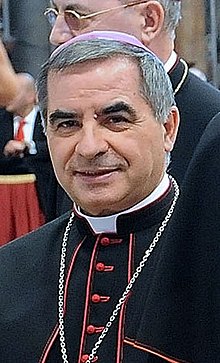
A similar situation has come up in the Vatican.  Pope Francis recently met with the staff of the office of Vatican Auditor General. He asked that disclosure of financial impropriety be balanced by “merciful discretion”.  Anyone that knows anything about auditing understands  auditors have a fiduciary duty to their client, in this case the Pope.  Francis was absolutely correct in asking for  confidentiality.  On the other hand, Francis was supposed to “clean up” Vatican corruption during his pontificate. One must ask in the wake of the trial of Cardinal Becciu for financial malfeasance writ large on a massive scandal (one financial deal on its own was said to lose $150 million dollars) whether this is the morally right thing to do. Aren’t donors entitled to see how their gifts have been squandered? 

 I have always been deeply distrustful of the excuse of letting something illicit  pass “for the good of the organization”.  This is often only code for “someone needs to be protected.”  In the case of the Vatican, too much water has gone under the bridge, and it is time to realize “merciful discretion” is interpreted by many as continuing to cover up corruption. Sunshine is the best disinfectant for the  disease of corruption. It is odd to say, but even the Pope can be legally right and yet morally wrong. 

The Ethics Resource Council advocates the use of the PLUS model of ethical decision-making.  PLUS stands for:

Policies–does an action conform to  the organization’s policies and procedures?

Legal–Is the proposed action legal?

Universal–Does the proposed action conform to the organization’s values and universal principles?

Self–does this action comply with my own view of right or wrong? 

I have proposed a variation of this model I have called PLUMS.  In the modern world, one has to consider how other people will view a proposed action.  How will it be perceived by others when it hits the media?  It is often a good idea to just step back and think about how your action will look when it hits X, Youtube, or Facebook.  Maybe this pause for reflection  can prevent you from doing something that is legally right, but yet morally wrong. 

Cardinal Becciu in better days…

Shoutouts

The coming end of  2023  and the beginning of 2024 means it is time for shoutouts to some extraordinary people and organizations I have had the pleasure of working with this year. Higher Education and students have been taking a lot of hits lately.  Despite all of the negative press there has been a lot of good going on at campuses around the country.  Let’s look at just a few examples of that on the Moravian University campus: 

Dr. Sonia Aziz–a wonderful scholar and academic, whose work in health economics has helped reduce the sum total of misery in the world.  She was recently named Dean of the Moravian University School of Business and Economics, a well deserved appointment.  For more information about her work, click here.

The Moravian University Craft Club, Stitches– The members of this club crocheted and sold Christmas ornaments and collected donations for  the Bethlehem Emergency Shelter this holiday season. It was a great experience for me as their faculty advisor to watch their camaraderie develop from week to week as they worked toward their worthwhile goal. 

The Moravain University Catholics on Campus–Another remarkable group of students, who spent time every week learning and practicing their faith. It takes courage to say you are religious if you live on a college campus these days. These students are proud of their faith and aren’t afraid of saying so. 

Moravian University Chess Club–Members practiced the Game of Kings, not over the internet, but in person.  It was great to sit over the chessboard and once again hit the time clock….

And of course, let’s not forget all of the Moravian students and groups that participated in the annual Christmas Vespers. To listen to this truly majestic service, please click here.

And what about in the broader world? 

Bethlehem Emergency Sheltering– In Luke 3:11 we hear, “John answered, ‘Anyone who has two shirts should share with the one who has none, and anyone who has food should do the same.’” Need I say more?

All the volunteer workers, employees of not for profit organizations, and clergy tirelessly working for a better world–Although we are all sure you could work for a higher wage somewhere else, please do take the time to remember Matthew 5:12, “ Rejoice and be glad for your reward is great in heaven…”

Wishing you all a wonderful Christmas and a Happy New Year.