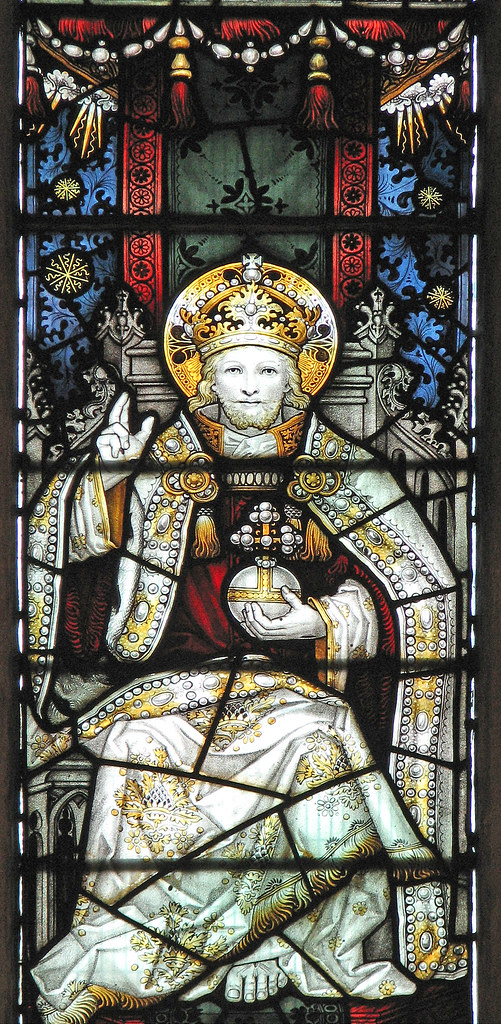
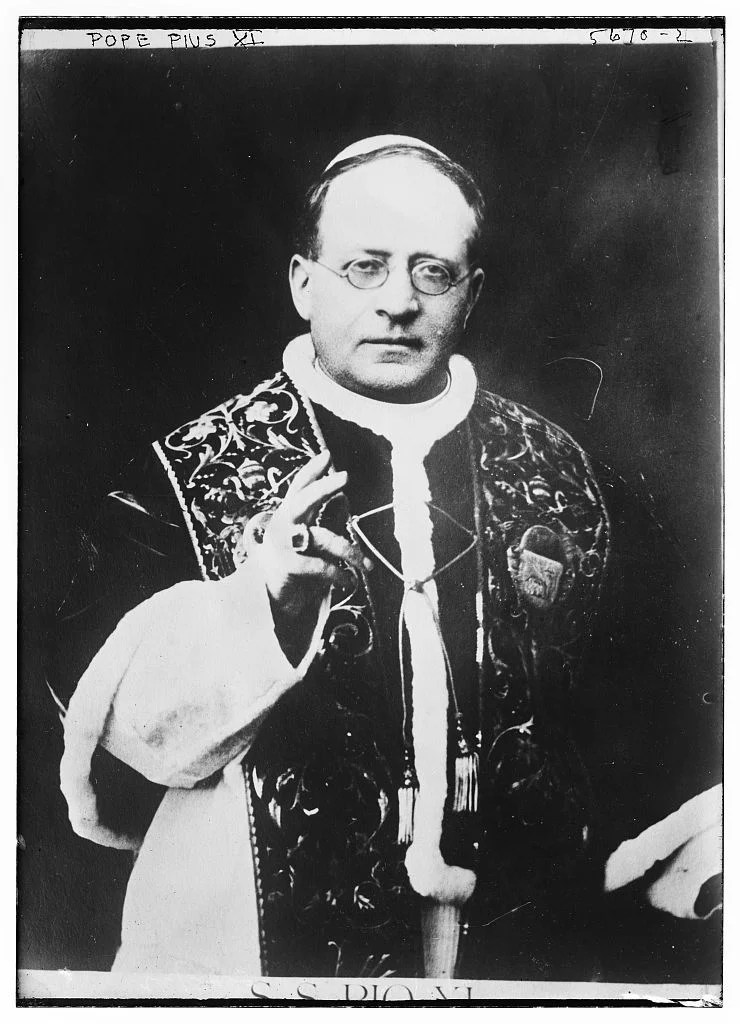
The Feast of Christ the King is a relatively late addition to the Roman Catholic (“RCC”) liturgical calendar. It was instituted by Pope Pius XI in 1925 through his encyclical “Quas Primas.” (The English translation may be found here) .This missive was issued after the end of World War I and the fall of several of the dynastic houses in Europe in its aftermath. Pope Pius XI pointed to the universal dominion of Christ. One biblical verse cited was Matthew 28:18 where Jesus himself says, “All power in heaven and on earth has been given to me.”
The Feast of Christ the King was originally celebrated on the last Saturday of October, near but not at the end of the liturgical year. It also immediately preceded the Feast of All Saints, reflecting Psalm 67:36, “ God is wonderful in his Saints”. The readings prescribed for the day were Colossians 1: 12-20 and John 18: 33-37. The latter relates the questioning of Jesus by Pilate. Pilate famously asks, “Are you a king then?” Jesus answers, “You say I am a king.” The Epistle for the day is also interesting. Many scholars consider Colossians 1:15-20 to be a very early Christian hymn proclaiming the supremacy of Christ. Colossians was probably written about 60 A.D. so the hymn predates Paul’s writing and reflects an already advanced Christology. The October date of the feast remains for those celebrating with the Extraordinary Form of the Roman Rite. Various Protestant groups, including the Anglican, Lutheran, Methodist and Moravian Churches celebrate Christ the King, but at various dates and under various names.
As part of the liturgical reforms following the Second Vatican Council, Pope Paul VI renamed the day to “Our Lord Jesus Christ King of the Universe” and moved it to the last Sunday of the liturgical year. This better aligned the liturgical calendar with the eschatalogical theme of the feast and the anticipation of the coming of Christ. Its new place in the calendar at the end of the liturgical year (Advent begins the next Sunday) is a reminder that Christ is the Alpha and Omega, the beginning and the end. The feast is a solemnity in the RCC and white is the liturgical color. The readings for the day were also aligned to the A,B, C reading cycle.
The Polish National Catholic Church (“PNCC”) also somewhat anomalously keeps this solemnity as well. The PNCC was founded in 1897, prior to the issuance of Quas Primas. The Liturgical Commission of the PNCC has been restoring many aspects of its calendar to that which existed at the date of establishment of the PNCC and it remains to be seen if the Feast of Christ the King will continue. The universal appeal of this commemoration though indicates that it will probably remain on the PNCC calendar.
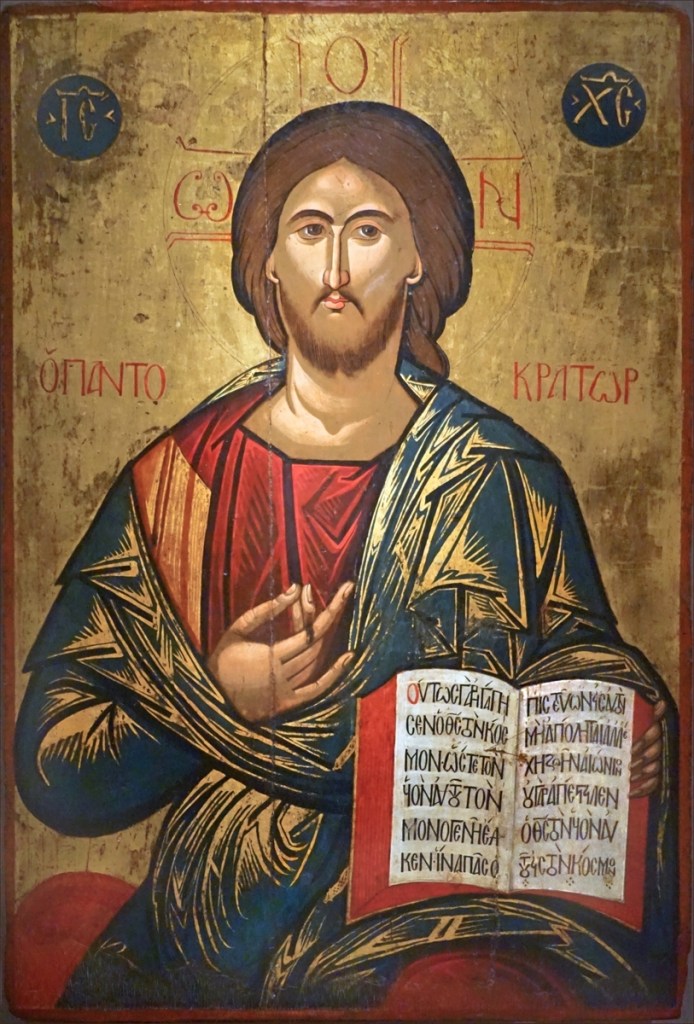
The commemoration of Christ the King also exists in Byzantine Christianity. This branch of Christianity is heavily influenced by patristic study. Cyril of Alexandria, a Fifth Century Church Father involved in the early Christological contests, rooted the kingship of Christ in the hypostatic union. There is no better exemplar of this doctrine than the Icon of Christ Pantocrator, meaning the “Ruler of All”. This icon is often found on the inside of the dome of the church, looking down on the congregation. The face of Christ often depicts the hypostatic union, with one side of his face depicting his divinity and the other his humanity. He has a stern expression, demonstrating his intent in the coming judgment.
Liturgically, Christ the King is celebrated on Meatfare Sunday in Byzantine Churches. This is the third Sunday in a pre-Lenten season and is the last day observant Byzantine Christians can eat meat before the Great Fast. It is also known as the Sunday of the Last Judgment. The Gospel of the day is Matthew 25:31-46, the parable of the Last Judgment.
 Mark Koscinski CPA D.Litt.