Legally Right But Morally Wrong

Many years ago, I recommended a tax planning strategy  for the bank I was working for. I thought it was a very slick plan and it truly was when it came to avoiding ( as opposed to evading) taxes. Tax avoidance is legal. Tax evasion is a crime.   Unfortunately, the strategy  looked very, very wrong when it hit the newspapers. Without going into details I didn’t personally profit from this action but the bank did. Despite this, and with hindsight, it just wasn’t the right thing to do.  As one of the directors of the bank said to me, “Mark, it was legally right but morally wrong”. There are many examples of this principle. Think about slavery.  For centuries it was legal in the United States but certainly ethically repugnant. 

 I learned a very important lesson that day.  Thinking about how people will perceive an action has to be included in the consideration of the action. The same director was later the Vice-chair of the Board of Trustees of the University of Pennsylvania.  She was one of the first (if not the first) female graduates of the Penn Law School. For those not following the latest news, the President of Penn resigned and is going back to teach at this same law school. Liz Magilll  was forced from her job when she, after  repeated questioning would not say  if calls on campus for the genocide of Jews would violate the university’s  conduct policy. Relying on what sounded like a legalistic defense, MacGill insisted this was a matter of “context”.  Those of us that work in academia understand academic freedom and how important it and context is.  I have wondered what my old director (who sadly passed away before her time) would say about this situation.  I can almost hear her say, “ Penn was legally right, but morally wrong.”  Perhaps the presidents of other colleges should evaluate their positions under this same standard. 

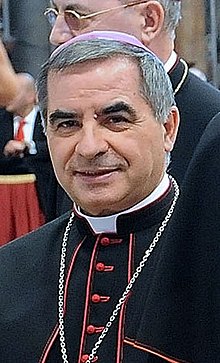
A similar situation has come up in the Vatican.  Pope Francis recently met with the staff of the office of Vatican Auditor General. He asked that disclosure of financial impropriety be balanced by “merciful discretion”.  Anyone that knows anything about auditing understands  auditors have a fiduciary duty to their client, in this case the Pope.  Francis was absolutely correct in asking for  confidentiality.  On the other hand, Francis was supposed to “clean up” Vatican corruption during his pontificate. One must ask in the wake of the trial of Cardinal Becciu for financial malfeasance writ large on a massive scandal (one financial deal on its own was said to lose $150 million dollars) whether this is the morally right thing to do. Aren’t donors entitled to see how their gifts have been squandered? 

 I have always been deeply distrustful of the excuse of letting something illicit  pass “for the good of the organization”.  This is often only code for “someone needs to be protected.”  In the case of the Vatican, too much water has gone under the bridge, and it is time to realize “merciful discretion” is interpreted by many as continuing to cover up corruption. Sunshine is the best disinfectant for the  disease of corruption. It is odd to say, but even the Pope can be legally right and yet morally wrong. 

The Ethics Resource Council advocates the use of the PLUS model of ethical decision-making.  PLUS stands for:

Policies–does an action conform to  the organization’s policies and procedures?

Legal–Is the proposed action legal?

Universal–Does the proposed action conform to the organization’s values and universal principles?

Self–does this action comply with my own view of right or wrong? 

I have proposed a variation of this model I have called PLUMS.  In the modern world, one has to consider how other people will view a proposed action.  How will it be perceived by others when it hits the media?  It is often a good idea to just step back and think about how your action will look when it hits X, Youtube, or Facebook.  Maybe this pause for reflection  can prevent you from doing something that is legally right, but yet morally wrong. 

Cardinal Becciu in better days…

Shoutouts

The coming end of  2023  and the beginning of 2024 means it is time for shoutouts to some extraordinary people and organizations I have had the pleasure of working with this year. Higher Education and students have been taking a lot of hits lately.  Despite all of the negative press there has been a lot of good going on at campuses around the country.  Let’s look at just a few examples of that on the Moravian University campus: 

Dr. Sonia Aziz–a wonderful scholar and academic, whose work in health economics has helped reduce the sum total of misery in the world.  She was recently named Dean of the Moravian University School of Business and Economics, a well deserved appointment.  For more information about her work, click here.

The Moravian University Craft Club, Stitches– The members of this club crocheted and sold Christmas ornaments and collected donations for  the Bethlehem Emergency Shelter this holiday season. It was a great experience for me as their faculty advisor to watch their camaraderie develop from week to week as they worked toward their worthwhile goal. 

The Moravain University Catholics on Campus–Another remarkable group of students, who spent time every week learning and practicing their faith. It takes courage to say you are religious if you live on a college campus these days. These students are proud of their faith and aren’t afraid of saying so. 

Moravian University Chess Club–Members practiced the Game of Kings, not over the internet, but in person.  It was great to sit over the chessboard and once again hit the time clock….

And of course, let’s not forget all of the Moravian students and groups that participated in the annual Christmas Vespers. To listen to this truly majestic service, please click here.

And what about in the broader world? 

Bethlehem Emergency Sheltering– In Luke 3:11 we hear, “John answered, ‘Anyone who has two shirts should share with the one who has none, and anyone who has food should do the same.’” Need I say more?

All the volunteer workers, employees of not for profit organizations, and clergy tirelessly working for a better world–Although we are all sure you could work for a higher wage somewhere else, please do take the time to remember Matthew 5:12, “ Rejoice and be glad for your reward is great in heaven…”

Wishing you all a wonderful Christmas and a Happy New Year. 

Stocking Stuffers

With  Christmas being upon us, we often scramble to find some small, last minute gifts that can be used as stocking stuffers.  This year, try something different. Why not give someone something old fashioned, like a book?  I mean an actual book in print and not a digital version of the book. Something they can hold in their hands.  I know, a quaint idea…. A book is a perfect stocking stuffer. 

So, If you are actively involved in management of any kind of organization, whether it is for profit, not for profit, or governmental, here is my reading list and ideas for last minute stocking stuffers.  They are listed in alphabetical order and not in suggested priority.  

The Beekeeper: Pollinating Your Organization for Transformative Growth by Katie Desiderio and  Michael Frino.  This is a wonderful and easy to read book describing how successful managers should run their organizations and treat their employees and colleagues.  The book is narrated by Catherine, the young founder of a business. A magical vacation experience transforms the way she leads her organization. Any manager will find this to be a thought provoking book.

Move: How Decisive Leaders Execute Strategy Despite Obstacles, Setbacks, and Stalls by Patty Azzarello. Discerning the proper strategy for an organization can be hard enough. Executing that strategy can be a whole different story.  Patty Azzarello, a successful consultant and business executive presents her ideas on how to get your organization moving forward. To be sure, this is not a book written for academics. Rather, It is written for the manager in the trenches who is trying to  execute strategy. This book  is a practical guide on implementing the organization’s mission and vision.

Noise: A Flaw in Human Judgement by Daniel Kahneman, Oliver Sibony, and Cass Sunstein. The authors of this book don’t need any introduction.  They are the Dream Team of Management Theorists.  Noise can be thought of as a sequel to Thinking Fast and Slow, Kahneman’s previous book on decision making.  Kahneman et. al. distinguish  between bias and noise. Bias receives all the attention, but noise can cause just as much variability in decision making. This is a well-written book that explains some difficult concepts in an understandable and accessible way. 

The Voltage Effect: How to Make Good Ideas Great and Great Ideas Scale by John List. Scalability has become a buzzword in the management community.  The author, a renowned academic and chief economist at Lyft and Uber, takes us on a tour of how to ramp up a small operation and make it larger.  List describes both the successful strategies for scaling and the pitfalls in trying to scale your organization.  It is a delightful book with many great ideas. 

All work and no play is not good for anyone.  So, if you are looking for pure pleasure reading on an offbeat topic,  I would suggest American Cosmic and Encounters, both written by Diana Walsh Pasulka.  These books discuss the UAP phenomena  from a fresh and interesting perspective. 

So everyone, good luck on beating the crowds in the shopping malls.  From someone who has always hated that, these books all have one advantage: you can order them from Amazon!

Have a great holiday season. 

Giving

Even though Giving Tuesday has come and gone, we continue through the holiday season. Please remember to give generously to your favorite Not For Profit Organization. I am proud to say that Stitches, the crafts club of Moravian University crocheted hats and scarves for the local emergency shelter. They also raised $500 for the same organization by selling hand made Christmas ornaments and gathering donations. Stitches has a small membership, but they all have big hearts. Congratulations to the members, as they try to change the world by helping people as much as they can when they can

Being Tone Deaf, Part 2

Last week I began reviewing the Annual Report of the Diocese of Metuchen, NJ (the “Diocese”). In that entry, I concentrated on the seemingly devastating loss in its investment portfolio. Just as a reminder  I want to emphasize the phrase “seemingly devastating” since there is not enough information in the Annual Report to make that determination. I also want to reiterate that I am in no way being critical of the management of the Diocese except for how it didn’t address the unrealized losses in the mailing.  I am “picking” on the Diocese  to make some points.  If anything, its marketing arm is tone deaf to how some of its materials might be received by potential donors. 

 This week I want to focus on some of the other concerrs I have with the Annual Report: 

  •  The Annual Report was issued almost a year after the period end.  I received it in May 2023, eleven months after the period being reported on ended. By itself, this gives you some pause.  By comparison, public companies issue their financial statements within 90 days of year end.  Obviously,  a Catholic diocese isn’t a public company and doesn’t have the resources or the legal requirement to issue such a report that quickly.  However, taking so long to issue a financial report  is  often taken as a sign of weak financial management.  This is particularly important when you are sharing bad news such as the unrealized investment losses the Diocese incurred. 
  • There is no indication of an outside accountant’s review or audit of the financial data. The financial statements seem to be in good form so there is obviously  a capable financial team in place. Nevertheless, there are some very complex accounting issues involved.  For instance, the Diocese self-insures and has an Incurred But Not Reported (IBNR) liability of $22.5 million.  Similarly, the clergy retirement and post retirement obligations amounted to $24.5 million. I don’t know about other potential donors, but I  would feel much better if  an outside reviewer could provide me with some comfort about  these balances.  How would a donor know the correct actuarial assumptions were included in the computation of the liabilities and the accounting principles are correct? 
  • Donating should be made easy.  The Annual Report doesn’t say where to send donations and what they will be used for. Perhaps a QR code or a Paypal address would be helpful. Why make potential donors search for where to send their hard-earned money?

With all of that being said, I truly applaud the Diocese for hitting the “Abuse” issue head on.  It did a great job of outlining its programs to control and eliminate such a terrible plague. The importance of this can’t be underestimated as the now disgraced former Cardinal Theodore McCarrick was once the Bishop of the Diocese.  Finally, I wish the Diocese well in its activities for the upcoming year.  It has been a tremendous force for good in Central New Jersey.  With the help of its donors and parishioners, it will be for many years to come.

The lesson to be learned for any NFP organization is to stop and  ask what the perception of its stakeholders is.  Management needs to scrutinize its communication strategy to see if the proper message is being conveyed. Alternatively, can the message be misconstrued by the public?  Sometimes management is too close to the issue to see how this information is being  received.  

Being Tone Deaf

Sometimes, we don’t really appreciate what some of our marketing material can do to our fundraising.  The NFP world relies on fundraising as its lifeblood but we sometimes don’t pay enough attention to how the world sees us. Let’s look at a case in point:  The 2022 Annual Report of the Catholic Diocese of Metuchen. This is the first of a two part blog on things that I quickly picked out from its  annual report. For those of you not familiar with this organization, the Diocese of Metuchen (the “Diocese”)  is a very large Central Jersey Catholic diocese responsible for 90 parishes, 26 schools and a hospital, among other things. The Diocese does an amazing job in  four NJ counties.  It has a strong financial condition, with net assets of about $125 million and a strong positive cash flow.  Nothing in this article should be construed to be a criticism of how the Diocese operated. The Annual report itself is  a very fine piece  of marketing material, but was tone-deaf to fundraising concerns. There are several reasons for this, but for this week  let’s start with the 800 pound gorilla in the room. 

The Diocese reported unrealized investment losses of $51.2 million during the year, resulting in a decrease in net assets of $36 million dollars for the same period.  To put this in perspective, the decrease  was approximately 18.1% of  ending total assets and 25% of the ending total investment portfolio. At the same time, the Diocese reported positive net cash flow.  In short, a very creditable performance in managing operating cash flows in a tough economic environment was swamped by what appears to be a cataclysmic decrease in the investment portfolio. 

How could this be?  Unfortunately, the Annual Report does not disclose the reasons why, nor does it disclose the composition of the investment portfolio.  So, let’s make the assumption (and it is only an assumption!) the investment portfolio had a heavy element of fixed income securities. What happened to interest rates over the year? The Fed discount rate (the marginal cost of borrowing for a bank and therefore the rate that drives other other interest rates) was .25% at the beginning of the fiscal year (June 30, 2021) and 1.75% at the end of the period. The prime rate also increased from 3.25% to 4. 75% over the same period. Interest rates were rising as the Federal Reserve was trying to deal with inflation.  As interest rates rise the value of fixed income securities fall. Such a large increase in interest rates is presumably the reason why at least part of the investment portfolio took such a beating.  The stock portfolio also could have taken a beating in the same time period.  For instance, the Dow Jones Industrial Average was 34,292 on June 30, 2021 and 30,824 on June 30, 2022 a decline of about 10%. Again, there simply isn’t enough information provided to see how the various components performed. 

Why is this disclosure important?  If the investment portfolio is heavily concentrated in fixed income securities there will be no loss if the securities are held to maturity.  The loss will turn into unrealized gain in subsequent periods. As the investments securities near maturity the market value of those securities will begin to approach the maturity (par) value of the securities.  On the other hand, there is no assurance that a stock portfolio will ever recover its value.  It seems to be that any donor would be vitally interested in knowing this information.  Financially responsible management of a fixed income investment portfolio will lead to zero unrealized gain or loss over time.  However, if the loss was due to a stock portfolio, would you want to donate to an organization that  could blithely lose such vast amounts of money?  And heaven forbid such a loss could be due to speculative derivative securities…. Based on what I have seen, I find it highly improbable that the investment portfolio includes such problems.  I am only using this Annual Report to make a point. 

I will readily acknowledge what happened may not be completely the responsibility of the Diocese.  For the life of me I can’t figure out why the Financial Accounting Standards Board (FASB) would require fair market value accounting if the NFP organization could demonstrate it has the ability to hold the securities to maturity.  Clearly the Diocese does.  Even more unfortunate is the fact that a business entity incurring such unrealized losses might be able to mitigate the losses by recording deferred taxes, thereby reducing the impact to the “bottom line”.  Since the Diocese is a NFP organization there is no tax effect for such losses.  Nevertheless, the Diocese needs to do a better job of explaining what happened. 

In the next installment, I’ll examine some of the other issues contained in the Diocese’s Annual Report. Stay tuned. 

The NFP World

As the Spring semester grinds to a close, and the burden of grading, the bane of all professors’ lives comes inevitably to an end, it is time to get back into the world of blogging.  Today’s topic comes courtesy of an assignment I gave to my Not For Profit Accounting class. Municipal and NFP accounting constitutes approximately 20% (give or take for any particular year) of the financial reporting section of the Uniform CPA exam so students are intensely interested in it.  They are often amazed how municipal accounting differs from the previous accounting they have learned.  That is a story for another day though.  

We sometimes need to stop and remind ourselves how important the nonprofit segment of the economy is.  I assigned a short paper to my class on the importance of the NFP segment to the entire economy.  Ashley Robinson, one of my students who earned two bachelor’s degrees in four years and will be employed by Pricewaterhousecoopers, summarized  what a powerful economic force the NFP sector is.  Ashley reported, 

“As of 2022 there are about 1.5 million not-for-profit organizations in the United States,and over 10 million worldwide. They employ about 10% of the workforce, but worldwide they employ about 7.4% of the workforce. About 5.7% of the United States GDP comes from not-for-profits. This is the third largest workforce in the United States just behind retail and manufacturing. These entities make money off donations, and in 2021 about 56% of people in the United States donated to charity, and 45% of those people donate in a monthly program. There is about 10% of the overall revenue that comes from individual donations. 80% of their revenue comes from government grants.”

These are truly staggering numbers in many respects. I am continuously amazed by the number of NFP organizations, the often underpaid and overworked employees who keep at their jobs because of their personal values, and the number of Americans who donate to a charity on a monthly basis.  This continues to show the United States and its citizens are and have been a generous nation.  There were times when I served on the board of an NFP organization that I felt as if no one cared. I would quickly come to my senses though and realize I was wrong.  Perhaps this little reminder that the vast majority of Americans do care will provide a little lift to those involved in the NFP world.

Another student made some interesting comments about the geographical  dispersion of NFP organizations.  He posited that there are more NFP organizations located in capital cities and in the eastern part of the United States. The former assertion seems reasonable to me and the latter he suggests occurs because of legacy wealth in the United States.  I think that bears additional research though.  If any of my readers have any insight into that, please let me know.  

Nurses

May 6 is Nurses Day in the United States and May 12 is International Nurses Day.  I just wanted to stop and give a shout out to the nurses both here in the United States and around the world. Medieval thinkers reckoned there were only three noble professions:  divinity (clergy), law, and medicine. You may perhaps notice the first two on that list have fallen out of disfavor in recent years for circumstances that I won’t discuss today but may be apparent to many of my readers. 

Nursing constitutes  the largest group of medical practitioners. How many people are involved in the nursing profession?  Just to give you an idea, the American Association of Colleges of Nursing reports:

“Nursing is the nation’s largest healthcare profession, with nearly 4.2 million registered nurses (RNs) nationwide. Of all licensed RNs, 84.1% are employed in nursing. The federal government projects that more than 203,000 new registered nurse positions will be created each year from 2021-2031.”  (1)

 The nursing  practitioners of all stripes generously give of their time not only to their patients but also to many volunteer and not-for-profit groups. Do nurses volunteer?  You bet they do.  Just ask the Red Cross or other agencies handling disaster relief. The National Association of Free and Charitable Clinics report 14,700 volunteer nurses took part in their clinics in 2021.  This is a phenomenal record of charitable activity.   

INursing is  among  the most highly regarded professions in the United States. Along with firefighters and doctors, nurses have been held in high esteem by the general public for many years. Perhaps my profession (certified public accounting) should take a hint from this. 

I  am proud  Moravian University, where I hang my mortar board and doctoral hood during the academic year,  granted over 100 bachelors’ degrees in nursing and many students with masters degrees in 2023. 

Whether working for pay or doing charitable work, stop and think about the number of times a nurse brought a smile to the face of someone facing a tough medical situation or their loved one. How many times has a nurse made you smile when you were facing uncertainty? It is no wonder nurses come to the top of the most respected charts. 

A happy International Nursing Day to one and all!

  1. Source: Nursing Fact  Sheet.

The NFP Potpourri

During the past semester, I came across many interesting NFP issues.  I thought I would do a short round up of some of those topics.  So, here goes!

  • Phishing and hacking at NFPs continues unabated. Vigilance is required more than ever.  I was personally caught in a phishing scheme this past semester.  During a particularly intense period I was skimming through my emails where I found what appeared to be an email from the new Dean of the Moravian University School of Business and Economics.  Not being overly concerned, I opened the email.  A big mistake. Unbeknownst to me, this resulted in over six thousand emails being sent out under my name to faculty, staff, and students. Meanwhile, realizing that something didn’t seem right, I contacted the IT security staff.  They were able to mitigate some of the consequences of my screw up, but some harm had been done. The security personnel told me that the University had been under siege in the last couple months. Put another way, just because you are an NFP entity doesn’t make you immune from the cyber-attack. In a previous blog I discussed how a church client of mine had been subject to a ransomware attack.  Who would think that even a relatively small entity such as a church would need to be careful about such things?  Obviously, they were wrong to ignore my warnings on this matter.  One other point before we depart from this subject.  If your organization is put in this position, don’t pay the ransom.  There is no assurance you will get your data and operating systems back. 
  • The Financial Accounting Foundation (FAF) makes it easier to file procedural complaints against the FASB and GASB.  The Financial Accounting Standards Board (FASB) regulates accounting practices for NFP organizations while the Government Accounting Standards Board (GASB) regulates accounting for governmental entities except for the United States itself.  The FAF Oversight Committee has provided a streamlined process for filing complaints about the rule-making process of these entities.  I believe this is a healthy development as  American accounting is often categorized as rule based rather than concept based  (such as the International Financial Reporting Standards).  Therefore, anything that shores up the actual rule-making process is certainly worth exploring.  Additionally, anyone in the accounting profession needs to understand how important transparency is to the profession.  More Vitamin D through sunshine is surely a good thing!
  • ESG reporting is coming. Unless you live in a bubble, you have heard the SEC has published draft regulations on climate change for public companies.  These companies will need to ascertain how their vendors are complying with this reporting. It is only a matter of time before this is pushed into the NFP world as the climate reporting takes hold.  Corporate contributors will then begin pushing this into organizations they make contributions to.  It is not too early to start thinking about this.  In the world of heated competition for contribution dollars an NFP organization complying with these disclosures will have a leg up in this battle. Caution: This is not completely certain as a similar prediction was made about Sarbanen-Oxley reporting as twenty years ago. The implementation of SOX reporting changed when it met resistance. Nevertheless, some form of ESG reporting will eventually be pushed down to the NFP world. 
  • Looking for a good text on Governmental and NFP accounting?  Try Accounting for Government and Nonprofit Organizations by Patton and Patton and published by Cambridge.  It is an outstanding presentation on the topic.