I am happy to say my book Decision Making Essentials is available through Vibrant Press. The above video is a short introduction to the book. For additional information, please see the full announcement on the Vibrant Website.
A Reminder For Everyone!
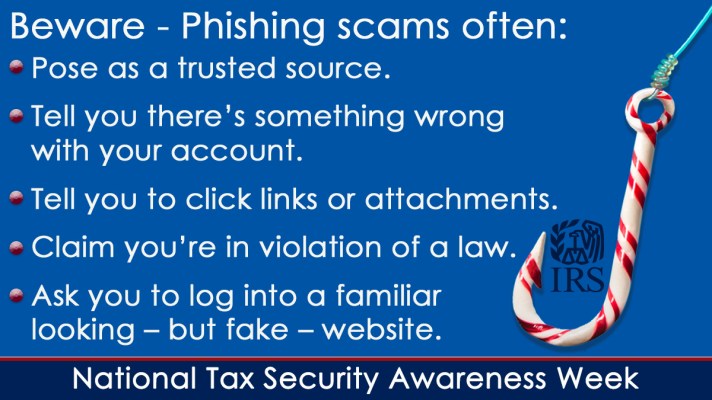
It may be the Holiday Season, but Cybercrime is still a big problem in the economy! As they used to say on Hill Street Blues (well, for those of us old enough to remember the TV show anyway):
Let’s Be Careful Out There!
Pink Week!
The Zeta Tau Sorority of Moravian College does its major fundraising for Breast Cancer Awareness during this week. It is truly a worthy cause undertaken by a remarkable group of students here at Moravian College. Despite the ravages of COVID, breast cancer still occurs at an alarming rate and we can’t forget that. One out of eight women are diagnosed with breast cancer, so sadly, the odds it will afflict someone we know is pretty high. Please consider giving generously to help contain and hopefully eradicate this scourge.
I reminded my classes this week it is important to be involved and to give back to your community. It doesn’t matter what cause you champion or what not-for-profit group you join. The important thing is to help change and improve the world. The good work may only effect one person at a time today, but sustained good work will ripple through the years like the “Butterfly Effect”, impacting more people in a positive way than you could possibly imagine.
Assistance to NFP Organizations
Even though this is being sponsored by NJ, the discussion is about grants to NFP organizations from the federal governments. What NFP doesn’t need financial help these days from COVID? The seminar is on Oct 22, so you don’t have much time to register!
| Non-Profit Assistance from USDA Rural DevelopmentRegister now to Learn about Grant, Loan andTechnical Assistance ProgramsThursday, October 22, 2020, 9:00 a.m. to 10:00 a.m. |
| COVID-19 magnified ongoing challenges to non-profit sustainability including maintaining income, finding funding, and reducing costs while enhancing community services. Join an informative webinar, sponsored by the Hunterdon Chamber of Commerce and Sussex County Chamber of Commerce, on USDA Rural Development grant, loan and technical assistance programs for non-profits. Michael Thulen, Jr. New Jersey State Director, USDA Rural Development adds, “Non-profits are the foundation to many communities they serve and the demand for help seems to increase constantly these days. The USDA can be a resource to provide working capital for carrying expenses while income has dropped during the pandemic and provide assistance with real estate, equipment purchases, or renovations to existing space to make them safe. We hope you can participate in the webinar sponsored by the Hunterdon and Sussex Chambers of Commerce on October 22nd at 9:00 to 10:00 a.m.”Find out how USDA Rural Development Community and Business Programs can help your organization fund its critical projects to recover from the pandemic and grow the organizational mission. Here’s a sample of projects USDA can fund:· Technologies and equipment needed to improve operations or services· Vehicles for transportation or deliveries · Building improvements to make safe places· Heating and Air Conditioning upgrades· UV disinfecting or lighting· Touchless entrances, lighting, and voice activated equipment· Working capital· Acquisition and renovation of real estate Michael Thulen, Jr. New Jersey State Director, USDA Rural Development, and Directors, Christine Schmelzle and Maryann Tancredi, will highlight new and current programs to help your non-profit:· Business and Industry Cares Act· One RD Guarantee Program effective 10/1/20· Community Facilities Programs· Rural Business Development Grant Program Through these programs, USDA Rural Development has funded charter schools, health care facilities, group homes, fire trucks and police vehicles, community centers, and many more essential building and equipment projects. To register, go to https://attendee.gotowebinar.com/register/5896776926929735696 |
Decision Making: Essentials You Always Wanted to Know
I am proud to say my book on Decision Making is now available from Vibrant Publishers. The website is http://www.vibrantpublishers.com. The book is part of their Self-Help Series but can also be used in undergraduate classes on decision analysis. I have actually field tested the contents in both an undergraduate and graduate class, and it was well received.
I have previously contributed an article on Commercial Lending to their Financial Management book, also part of the Self-Help Series. I look forward to working with them in the future!
Vatican Financial Scandal Provides Lessons for NFP Managers—Sadly…
The Vatican recently announced Giovanni Angelo Cardinal Becciu has resigned as prefect of the Congregation for the Causes of Saints (the Vatican department overseeing investigations into the lives of potential saints) and his rights as a cardinal. What the latter means is unclear at this moment, but presumably tCardinal Becciu will not be able to participate in any conclave for the election of a new pope. If so, he becomes the third cardinal stripped of such rights under Pope Francis. This his is a rare public rebuke, especially since Cardinal Becciu is 72 years old and could have participated in papal conclaves until the age of 80. To be fair, the Cardinal has maintained his innocence, claiming he should be judged by the norms in place at the time, and not retroactively. Sadly, he has overlooked the fact legal action always has the benefit of hindsight.
This blog has previously reported on the use of Peter’s Pence funds (the world wide collection taken up for the Vatican) for the purchase of a warehouse property in London that would eventually be converted into luxury apartments. The purchase price was purportedly somewhere in the vicinity of $225 million, but that also remains unclear at this point. Cardinal Becciu’s name has been prominently connected with this transaction while he served as sostituto, the deputy to the Vatican Secretary of State (papal prime minister) and functioned as the Pope’s chief of staff. There are also claims of nepotism in the form of payments to relatives.
What can an NFP manager learn from this debacle? Not only was the use of the funds apparently not authorized by Pope Francis, the books and records of the transaction were also tampered with. The loan for the financing of the property was netted against the asset on the balance sheet of the Vatican. As any student of accounting will tell you, this is a major no-no in accounting. Transactions must be shown “broad” with no netting so important details such as the true amounts or even the existence of the debt in this case could not be concealed. Netting the loan value against the asset value is simply an outright attempt to conceal liability. Even more importantly, this serves as a reminder for the management of any not-for-profit organization the accounting for transactions must be separated from the personnel initiating and conducting the transaction. If this is not possible because of limited personnel, there must be a robust review of the accounting records to make sure “entrepreneurial” accounting of this type will be detected.
To Pope Francis’ credit, he had prohibited netting in accounting some time ago, instituted new controls on contract approvals and has punished the apparent wrong-doer. This is all good. However, what about the more general question of the control environment? How did the Vatican Secretary of State (the Pope’s prime minister) not know his deputy Becciu was involved in some very shady dealings? The Church is a hierarchical structure. It would seem there should have been some effective detective controls in place. Apparently, there were not. Also, segregation of duties seem to have been very poor since one would not think a chief of state would be involved in such a major acquisition or access funds in the manner he did.
Update: On July 2, 2021 Cardinal Becchiu was indicted for fraud, embezzlement, and a host of other crimes. The trial is scheduled to begin on July 27, 2021.
Redundancy
Zoom crashed on the first day of classes. Apparently, the outage was not restricted to Moravian College, where I am a professor, but was a more global phenomena. This was not a particularly good start to the semester. It is even more embarrassing as students in many colleges are petitioning for tuition reductions precisely because many if not all classes at many colleges are being held on-line. Its failure caused a brief panic at the school, as professors scrambled for alternatives.
The question is why was there such anxiety. Zoom has become a mission critical platform not only for colleges and universities but also for many other organizations during this pandemic. Procedures should have been in place to provide for this contingency. The United States military has a saying, “if you have one you have none.” A very pithy saying to be sure, but it does carry a nugget of truth. Any mission critical process, platform etc. must have a backup. I am sure many of us have been frustrated when we have tried to make a purchase at a retail outlet only to find it couldn’t be done since “the computers are down.” Think of the potential sales lost in such situations, as well as the customer dissatisfaction generated.
The word redundancy has taken on some bad connotations in modern American life, but it is necessary in the operation of any organization. What are some of the characteristics of a redundant system? First, people have to know about it and be trained in its use. The College offered two or three alternatives to Zoom during the crisis in an attempt to be helpful. In my opinion this was an okay but not an optimal response. The technology group needs to be ready to support one platform in a crisis, and not multiple platforms. Also, using multiple platforms only sows the seeds of confusion among the users. Instead of spending time figuring out which platform to use, the instructor and the students could have spent the time more profitably brushing up on the operation of the uniquely designated second platform. After all, if Zoom crashed once, why can’t it happen again? The next time professors and students will be acquainted with the backup platform, and the transition to its use will be even smoother.
Secondly, the redundant system should be something users have at least a passing familiarity with. This can be done through training or by using another already existing platform. In our case, the college uses Canvas as its learning management system. Professors and students are used to navigating through the system. Canvas has a completely functional video conferencing capability that can be activated with two or three clicks. In short, it was the perfect backup platform. Simple, widely available and known to all the users, and easily operated. It was more than sufficient to deal with a short Zoom shortage.
What is the lesson for NFP organizations? Remember redundancy. Remember simplicity in backup design is a key consideration as the first reactions to any crisis can be confusion or even a short burst of panic. Having a simple to use backup platform will save a lot of time and nervous energy.
Use Them or Lose Them!
We all know the airline industry has suffered horribly during this pandemic. Only a fraction of the airline fleet is being used, and I can’t even guess at what capacity. It should come as no surprise though many frequent flier points are lapsing. One way you can help your favorite Not-For-Profit organizations is to donate your expiring points to them. I am told this will update your usage record and roll the points forward. If this is correct, it is a win-win for both the NFP and you. Even so, donating points seems like a painless way to help struggling organizations serving the common good. Please consider this as another way to help!
PPP Loan Forgiveness–Part II
The Small Business Administration(SBA) has just published its PPP loan forgiveness process. Borrowers are required to submit a package to their lenders documenting use of the funds was done in accordance with the terms of the loans. The lender will have 60 days to make a good faith determination this was so. Any deficiencies in the application will need to be corrected before the package is submitted to the SBA. Assuming this is done properly, the SBA will then have 90 days to make a determination of forgiveness. If rejected, there is an appeals process. The SBA has indicated it will review all loans in excess of $2 million for compliance and possibly for eligibility as well.
In a previous blog I was critical of the Financial Accounting Standards Board requiring organizations to wait until the SBA formally grants forgiveness of the PPP loans before they could be removed from the borrowers’ balance sheet. Let’s look at this situation. There is a high probability the loan packages will be rejected by either the bank or the lender along the way. Corrections will be made, adding more time to the process. (You have all dealt with banks and regulators before, right?) Optimistically, this could take a minimum of six months. The borrower could have satisfied all of the requirements for forgiveness except not hand-in complete paperwork. This simple action, subject to the whims of bankers and regulators, could determine the date the loan is forgiven and not the economic event of compliance. Since the SBA will not begin accepting applications until August 10, PPP liabilities will be on the balance sheet for six months minimum, clouding readers’ analysis of the financial statements. Does this make sense to anyone?
Let’s look at some of the practical implications of this. I had complained NFP organizations with a fiscal year-end of June 30 had no chance of having the debt removed from their balance sheet. Now, NFP organizations with a fiscal year-end of September 30 will also be carrying the debt on their year-end balance sheets. This will probably be the case for December 31 year end organizations as well.
In the meantime, bankers will need to give very clear instructions about what they will accept as proof of compliance to speed the process along. Similarly, NFP management should not make the lenders or the SBA work hard to recommend or grant forgiveness. Take the time to put together an easy to follow package with sufficient detail. Make the package easy to review. In short, don’t scrimp on the upfront preparation. It will only slow the process down. You want this loan off your balance sheet as fast as you can.
Put Me In Coach!
Today is the start of the major league baseball season. Major League Baseball is big business and some of its aspects have already been discussed in these pages. Many issues were already overhanging baseball before the onslaught of COVID. The collective bargaining agreement needs to be renegotiated next year. Attendance has been declining. The fan base is aging. My beloved Mets are up for sale–again. (Don’t feel too bad for ownership though. Forbes estimates the team is worth $2.4 billion. It was purchased for less than $400 million, resulting in a slick 12% compounded rate of return for a mismanaged team if a sale goes through at the reported value.)
And then, there is COVID, the 800 pound gorilla in the baseball room. Besides the human tragedy the pandemic has caused, it has altered the very core of baseball itself. There are a slew of new odd rules (someone please explain the roster rules to me) and a shortened. Fans are argue about what a championship would mean this year, if anything. What happens if a team’s starting lineup tests positive for COVID? What happens if COVID is around next year too?
I simply don’t care about any of this except for the human pain caused by COVID of course. Baseball is a national treasure, and I can’t wait to watch a game. As a deprived fan, I have been reduced to watching the neighbors kids play wiffle ball (from a socially safe distance of course.). These youngsters played with a great deal of enthusiasm, and I loved it. They ribbed each other in a good natured way and made fun of their favorite teams. It was great.
I need more though. I need to see a major league slider and a two seam fastball. I need to see someone go from first to third on a base hit. I need to hear Keith Hernandez and Ron Darling call a Met’s game. The country and I need Major League Baseball! Not only will it bring joy to baseball fans, but it will help the economy as well. As long as the players are safe, I say Batter Up!

