Did She or Didn’t She?
Die, that is. Did the Virgin Mary die? It is a burning question as we come to the feast of the Dormition/Assumption on August 15. The feast commemorates her bodily assumption into heaven, but the details are sometimes a little sparse on whether she was alive or had fallen asleep in the Lord.
Years ago, I had an irate parishioner look at an icon of the Assumption depicting the Dormition (the death of the Virgin). She stormed out and said that the icon was heretical. We never saw her again in the church. The belief that Mary was taken into heaven without dying first is a relatively modern, albeit minority opinion. The idea that Mary never died before her Assumption gained noticeable traction only among a few Catholic theologians in the 17th century. However, this is not officially defined Catholic dogma. The Roman Catholic Church leaves its members free to hold either view, though the historical standard remains that she died first.
For the first 1,600 years of Christian history, the near-universal tradition in both the Eastern and Western Churches held that Mary experienced a peaceful, physical death. Early Christian texts, such as the Transitus Mariae (“The Passing of Mary”) and the sermons of Church Fathers (such as St. John Damascene and John Chrysostom), described Mary’s departure as the Dormition (“falling asleep”). According to this ancient tradition, Mary died in the presence of the Apostles (as the famous icon of the event demonstrates) and was buried. Shortly thereafter, her body was resurrected and taken up into heaven.

In the 1600s, some Western Catholic theologians began to argue that Mary never died at all. Their logic was tied to the doctrine of the Immaculate Conception. The Bible states that physical death is a consequence of Original Sin (Genesis 3:19, Romans 6:23). Since Mary was preserved from Original Sin (according to Roman Catholic dogma) from the moment of her conception, these theologians reasoned that she should not have been subject to the penalty of death. They believed that at the end of her earthly life, she was simply transferred directly—body and soul alive—into heaven.
When Pope Pius XII officially declared the Assumption of Mary as a formal dogma of the Roman Catholic Church in 1950 (Munificentissimus Deus), he intentionally avoided settling the debate over whether she died or was assumed alive. The wording of the doctrine was carefully neutral:
“The Immaculate Mother of God, the ever-virgin Mary, having completed the course of her earthly life, was assumed body and soul into heavenly glory.”
By using the phrase “having completed the course of her earthly life” rather than “after her death,” the Pope allowed Roman Catholics to freely hold either view. The Mortalists (Majority View) believe that Mary died a natural death out of a desire to share in her Son’s human destiny and was resurrected immediately afterward. Pope John Paul II strongly affirmed this traditional view in a 1997 papal address, noting that the idea of Mary not dying was unknown to early Christianity. The Immortalists believe that because she was free from sin, Mary was spared physical death altogether and assumed to be alive.
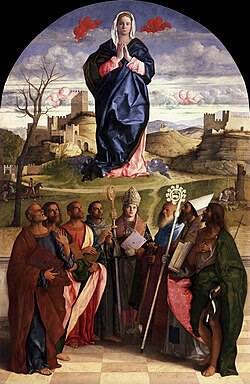
The earliest tradition of the Church is that the Virgin did indeed die. When the Apostles opened the grave, the body was gone, replaced by flowers. As the cult of the Virgin grew, Western Christianity was influenced by the artwork of Titian, El Greco, and Rubens. All of these portraits showed a very much alive Virgin ascending into heaven. It was just natural that this would be absorbed into Catholic culture. This belief was further compounded by the spread of the co-redemptrix cult, even though it has been explicitly rejected by Catholic leadership even recently. It is amazing how art and the popular belief of a vocal minority can impact theology that is thousands of years old.